2026-10-11 ·
Why Does My Roof Leak When It Rains Hard (But Not in Light Rain)?
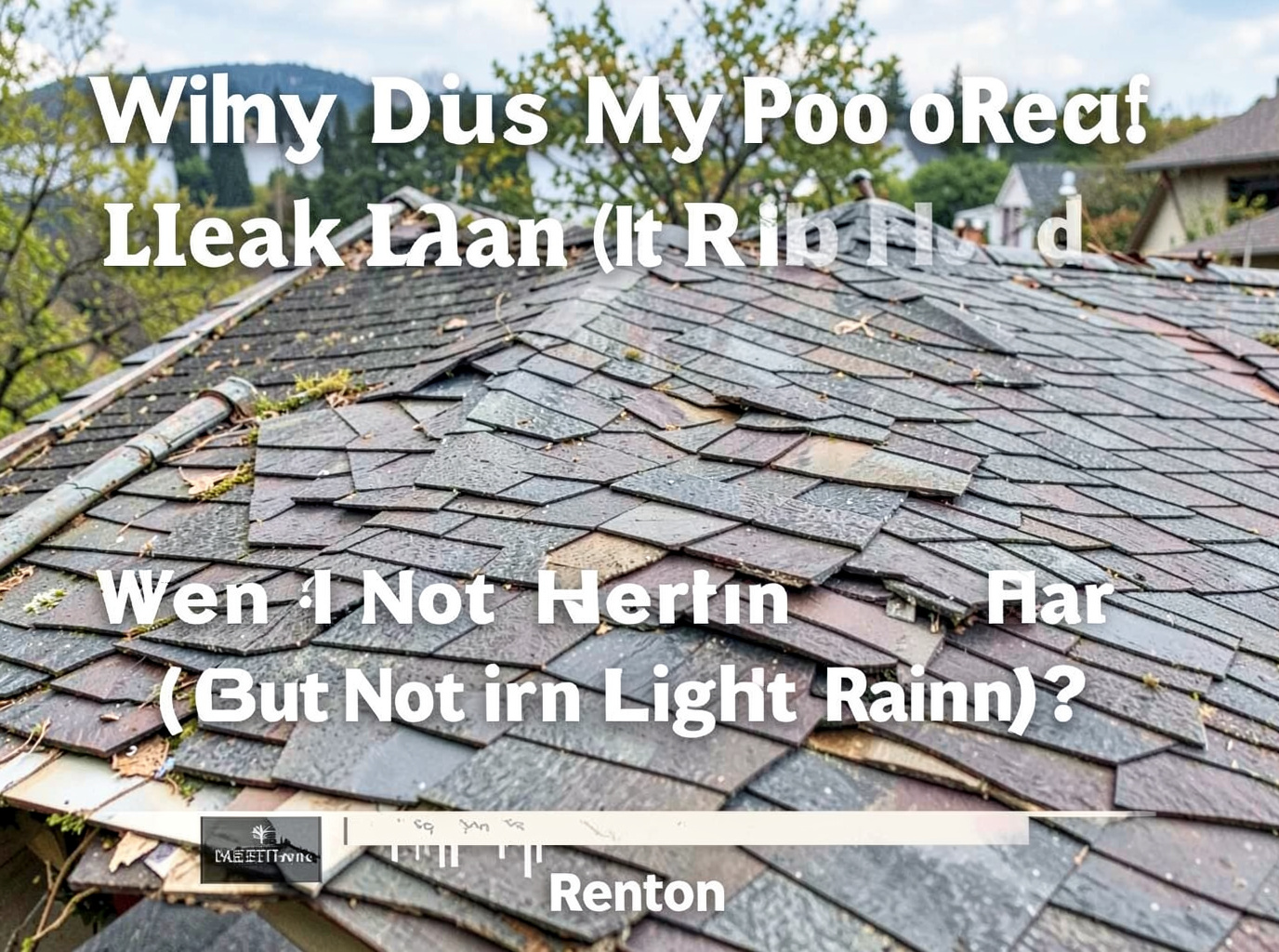
In Renton, roof leaks during hard rain but not light rain happen because intense downpours deliver enough volume and pressure to force water through small gaps in shingles, flashing, or underlayment that lighter showers simply do not overwhelm. These openings often sit at valleys, around chimneys, or along edges where prior wear has created narrow channels. Once water volume exceeds the roof's ability to shed it quickly, the material saturates and penetration begins. Local homes in areas like Benson Hill and Talbot Hill, built decades ago with standard asphalt shingles, show this behavior more often after years of exposure to King County's mild oceanic climate and its repeated wet winters.
How Rain Intensity Overwhelms Roof Components
Light rain allows most roofs to drain before water reaches vulnerable points, while heavy rain creates standing sheets that test every seam. In neighborhoods such as Downtown Renton and the Highlands, wind often accompanies stronger storms and drives water sideways under lifted shingle edges or loose flashing. Once water gets beneath the surface layer, it travels along the underlayment until it finds a nail hole or joint. This movement explains why leaks appear inside the home far from the entry point on the exterior. Residents in nearby Bellevue and Tukwila report the same pattern when storms intensify after several dry days, because accumulated debris in gutters slows drainage further. Checking for these entry routes requires systematic inspection rather than guesswork.
King County Weather and Terrain Effects on Leak Timing
Renton sits in a region where wet winters bring repeated heavy rain events rather than steady light drizzle, so roofs experience sudden high-volume tests several times each season. Sloped lots in Kennydale and along Lake Washington can channel runoff toward foundations and lower roof edges during intense storms, increasing pressure at those points. The terrain around the Renton Boeing Plant and Gene Coulon Park creates micro-climates where wind funnels water against certain roof faces. Older housing stock common in these zones often has single-layer shingles that have lost flexibility, making them more prone to temporary lift under heavy flow. Light rain rarely produces the volume needed to exploit these conditions, which is why the same roof stays dry until the next strong front arrives from the Pacific.
Practical Steps to Identify and Stop Hard-Rain Leaks
Start by noting which storms trigger interior water and map those events against visible roof features such as valleys or penetrations. A thorough roof leak detection & inspection can reveal whether moss buildup, wind-driven debris, or aging flashing is creating the pathways that only high-volume rain exploits. In many cases, targeted repairs at specific seams restore performance without full replacement. When leaks appear during an active downpour, temporary measures may be needed until conditions allow permanent work. Homeowners in North Renton and surrounding King County communities often combine seasonal checks with prompt attention to any new interior stains to prevent escalation.
Related Local Factors Worth Checking Next
Windstorms common to the area can loosen components that then fail only under heavy rain, creating a delayed symptom pattern. Moss growth, addressed in detail in our guide on moss causing leaks, traps moisture and widens small gaps over time. Gutter and downspout issues compound the problem by allowing overflow directly onto roof edges during peak rainfall. For properties in Cascade or Earlington Hill, combining these checks with attention to chimney flashing often uncovers the exact points that light rain bypasses but hard rain does not. When storms are forecast, having a plan for emergency roof leak repair helps limit interior damage until full assessment is possible.